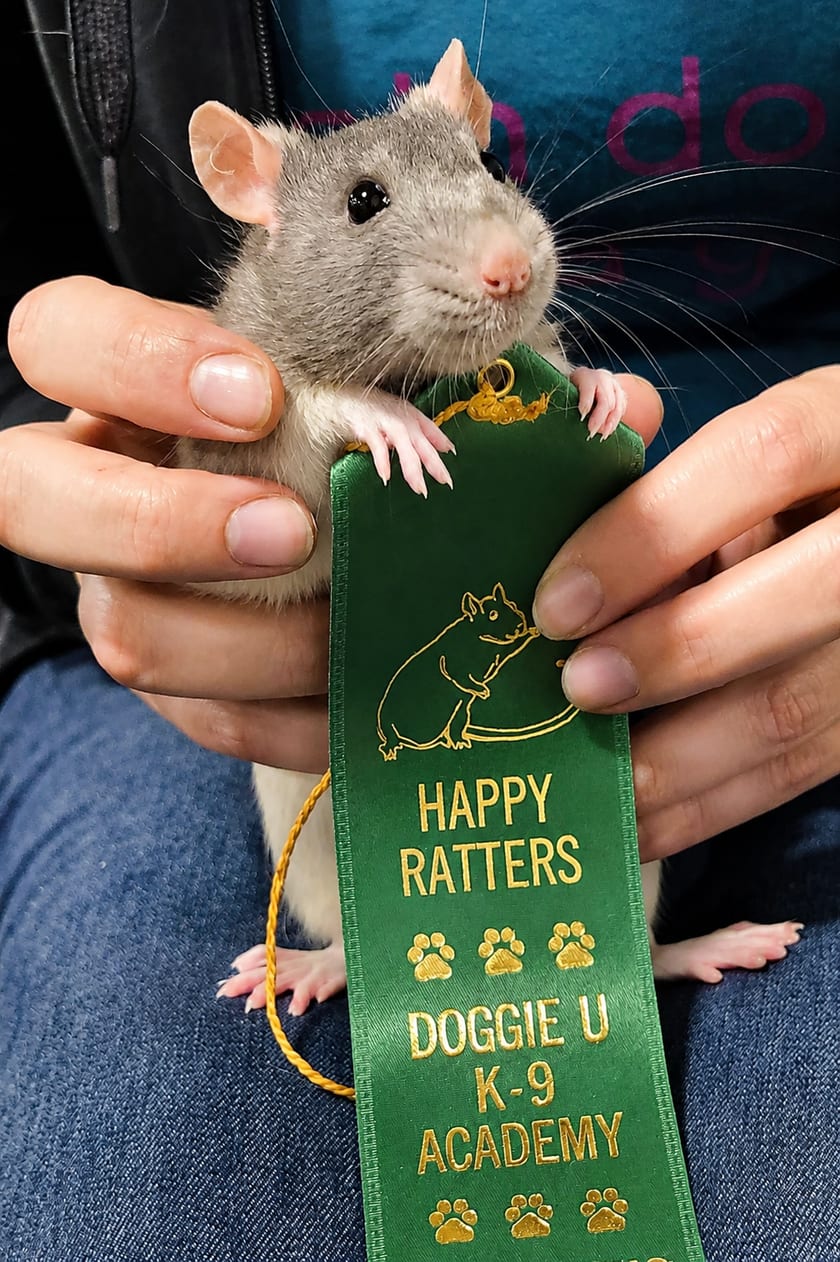
A quiet space away from the ring
When they're not working, rats rest in a well-ventilated cage set up well away from the noise and activity of the trial ring — usually in a separate room entirely. Wire cages with solid floors are preferred, and clean, dry bedding, food, and water are always on hand.
Rats are social animals, so they rest together with their companions rather than alone. If a cage ever starts to smell, that's treated as a sign to check on cleanliness right away — rats are naturally clean animals, and a well-kept cage shouldn't smell at all.
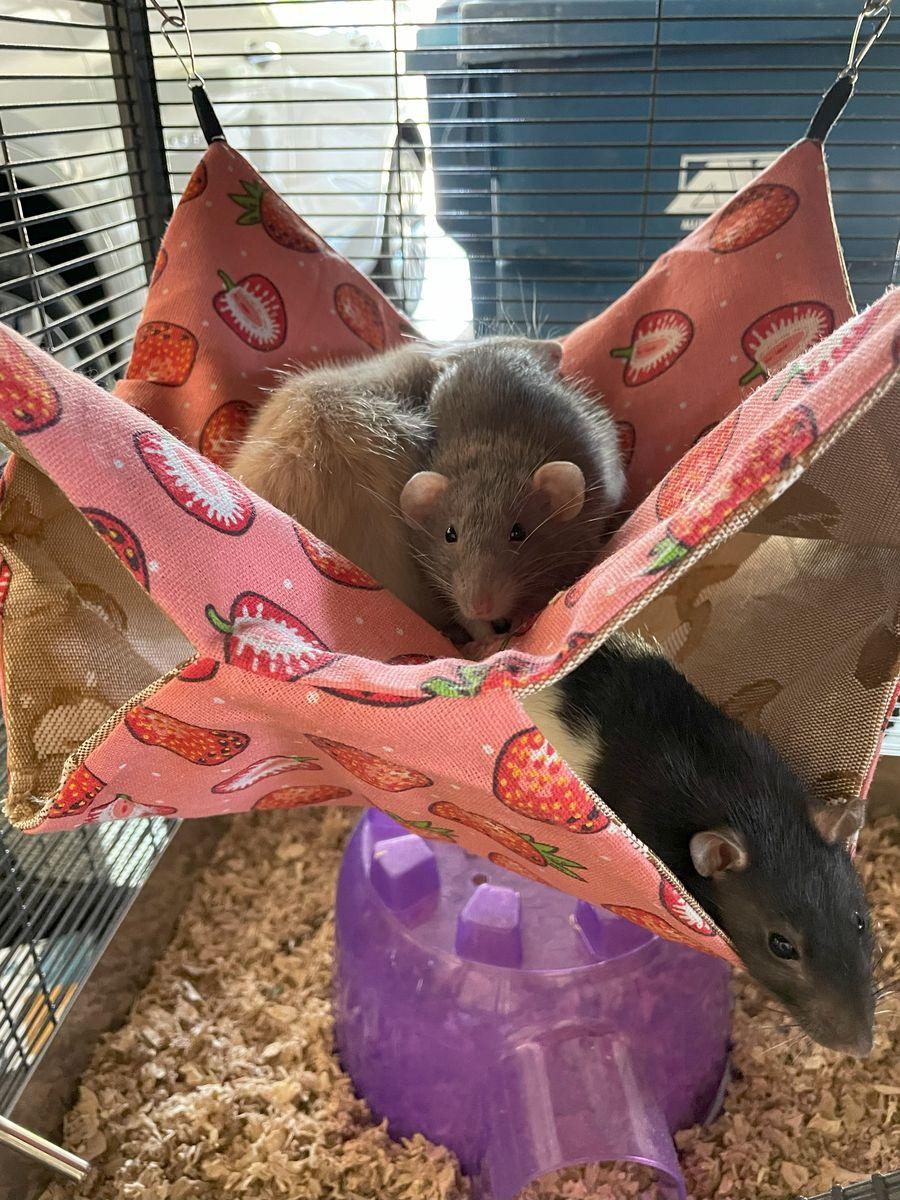
Never too hot, never too cold
Rats are most comfortable between 65° and 80°F, and handlers watch for their natural cues: huddling together for warmth if they're cold, or smearing saliva to cool down if they're hot.
On cooler days, extra bedding, warming discs, and fleece keep them cozy. On warmer days, cold tiles, ice, frozen water bottles, and frozen treats help them stay cool. Handlers stay alert for signs of overheating — panting, lethargy, stretching out, or not eating — so they can step in immediately if a rat needs relief.
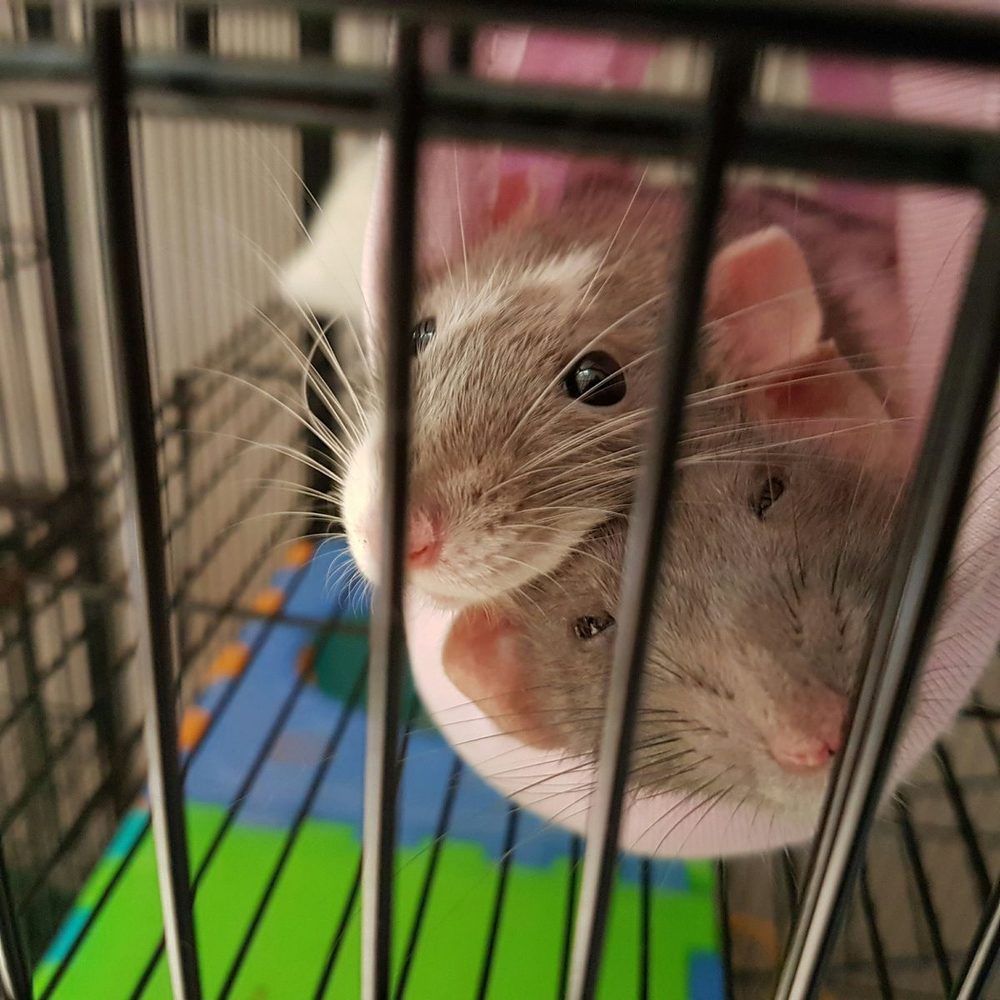
Short shifts, plenty of rest
Rats are rotated through trials rather than kept working continuously. A single working shift never runs longer than 90 minutes — and often much less, depending on the weather.
After every shift, a rat goes straight back to the resting area for at least 30 minutes to relax, eat, and drink before doing anything else. A rat that seems tired, stressed, or reluctant is simply given more time off.
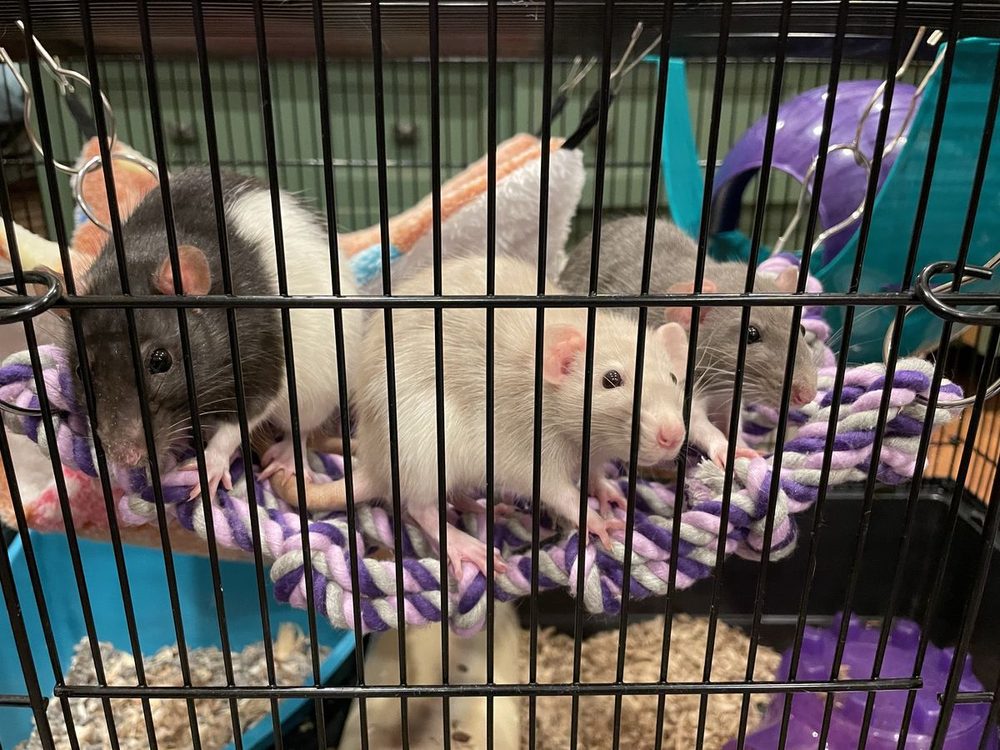
Fresh bedding daily
Every rat starts its shift in a clean container with fresh, dry bedding — often with a small snack tucked in to make the experience a rewarding one. Damp bedding is never reused; it's swapped out for dry bedding right away.
Containers are fully cleaned after every day of trials, and equipment used for course setup or cleanup is never repurposed as rat housing. It's one more layer of care that keeps things sanitary for the rats and fair for every dog in the ring.
If a rat is ever injured or passes away during a trial, please file an incident report as soon as you're able.